
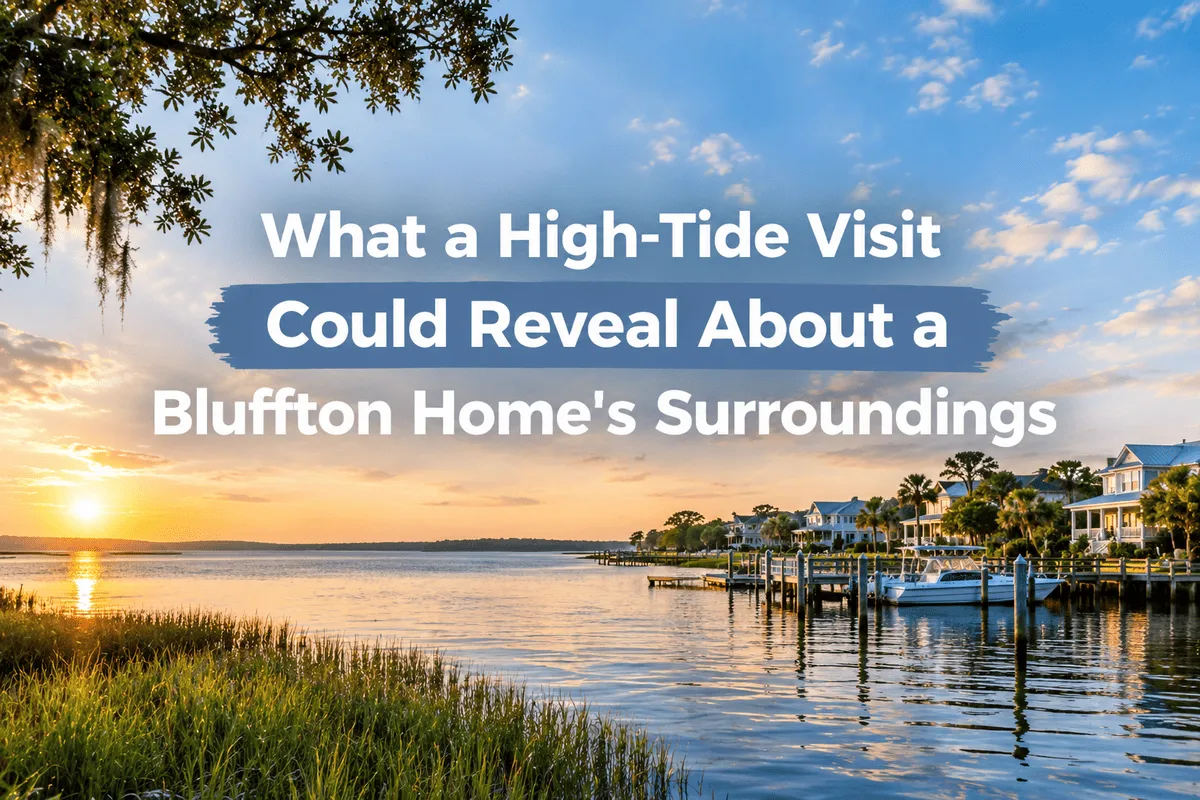
What a High-Tide Visit Could Reveal About a Bluffton Home's Surroundings
A home in Bluffton, South Carolina, can look different depending on the water level, recent rainfall, and condition of the surrounding land. For buyers considering properties near tidal creeks, marshes, or the May River, visiting during high tide can provide useful context about the property's setting.
A high-tide visit does not prove whether a property is at risk of flooding. However, it gives buyers another opportunity to observe nearby water, access routes, drainage features, and the relationship between the home and its surroundings.
Watch How Water Sits Around the Property
Bluffton's connection to the May River and surrounding tidal waterways makes water conditions an important part of evaluating certain properties. During a high tide, look at the visible shoreline, nearby low-lying areas, and any paths or outdoor spaces close to the water.
Pay attention to whether the yard slopes toward or away from the home. Look for drainage channels, standing water, and areas where the ground appears unusually wet. These observations are useful starting points, but a single visit cannot establish how a property performs during heavy rain or a major storm.
The Town of Bluffton provides information about local flooding and drainage concerns, including how stormwater systems help manage runoff.
Check the Route From the Street to the Front Door
The condition of a home's surroundings matters beyond the property line. During your visit, observe the driveway, sidewalks, access roads, and any low points along the route.
If water is visible near the road or drainage ditches, note its location and ask whether the area has experienced flooding. Avoid walking through flowing or standing floodwater, and never drive through a flooded road.
Buyers comparing homes in Bluffton and nearby Ridgeland should inspect the actual access route to each property rather than assuming similar-looking neighborhoods have the same drainage conditions.
Look Beyond the View From the Porch
Waterfront and marsh views may be appealing, but the view is only one part of the property assessment. Check the yard, retaining structures where present, exterior walls, and visible drainage features for signs that deserve further investigation.
Look for water marks, soil erosion, damaged landscaping, or areas where water appears to collect. These signs do not automatically indicate a serious problem, but they may justify additional questions or a professional inspection.
In Beaufort and Port Royal, buyers considering properties near coastal waterways can use the same careful approach. The specific risks and conditions depend on the individual property's location, elevation, construction, and drainage.
Compare High Tide With Other Conditions
A high-tide visit provides one snapshot, not a complete picture. Arrange another viewing at a different time if possible, and consider visiting after rainfall when conditions allow.
Check available property disclosures and ask the seller about any known water intrusion, drainage problems, or past flood damage. Review applicable flood maps and insurance requirements, and consult qualified professionals when the property's exposure is unclear.
For homes around Hilton Head and St. Helena Island, these checks can also help buyers understand the property's surroundings before making a decision. Do not rely on the view, the listing description, or one visit as proof that a property is free from flooding concerns.
Questions to Resolve Before Making an Offer
Before committing to a Bluffton property, make sure you understand the following:
Drainage: Where does rainwater flow, and are there known drainage concerns?
Flood exposure: What do available flood maps and property records show?
Property condition: Are there signs that require a closer inspection?
Insurance: What coverage is available and required for this specific home?
Access: Can you reach the property safely under different weather conditions?
The answers should come from reliable records, seller disclosures, inspections, and appropriate insurance or flood-risk professionals—not from visual observations alone.
Make the Property Fit Your Long-Term Plans
A high-tide visit can help you notice details that may be less obvious during a quick showing. Combined with a review of drainage, flood information, property condition, and insurance, it gives you a more complete basis for comparing homes. Buyers can also explore how to choose the right Bluffton, SC community when weighing neighborhood features alongside property conditions.
Blake Gruel and the team at GGSellsSC.com serve buyers and sellers in Bluffton and surrounding areas, including Beaufort, Port Royal, Ridgeland, Hilton Head, and St. Helena Island. Buyers looking for the best Realtor for their needs should prioritize clear communication, local property knowledge, and help identifying the right questions before an offer is made.
A top Realtor should help you assess the property carefully while recognizing when specialist advice is needed. The goal is not to rule out every home near water, but to understand its setting and make a decision based on verified information.
Frequently Asked Questions
Is visiting a Bluffton home during high tide useful?
Yes. It can help you observe nearby water levels, drainage areas, and access conditions, but it cannot establish the property's full flood risk.
Does a high-tide visit confirm whether a home will flood?
No. Review flood maps, disclosures, drainage information, and professional assessments for a more complete evaluation.
What should buyers check near tidal waterways?
Look at the shoreline, yard grading, drainage features, access roads, and any signs of erosion or water intrusion.
What documents should buyers review before purchasing a home near tidal water in Bluffton?
Review seller disclosures, available flood maps, insurance requirements, and inspection reports to better understand the property's condition and potential water-related risks.
Should I visit the property after rainfall?
If practical and safe, yes. A separate visit may reveal drainage conditions that are not apparent during a dry-weather showing.